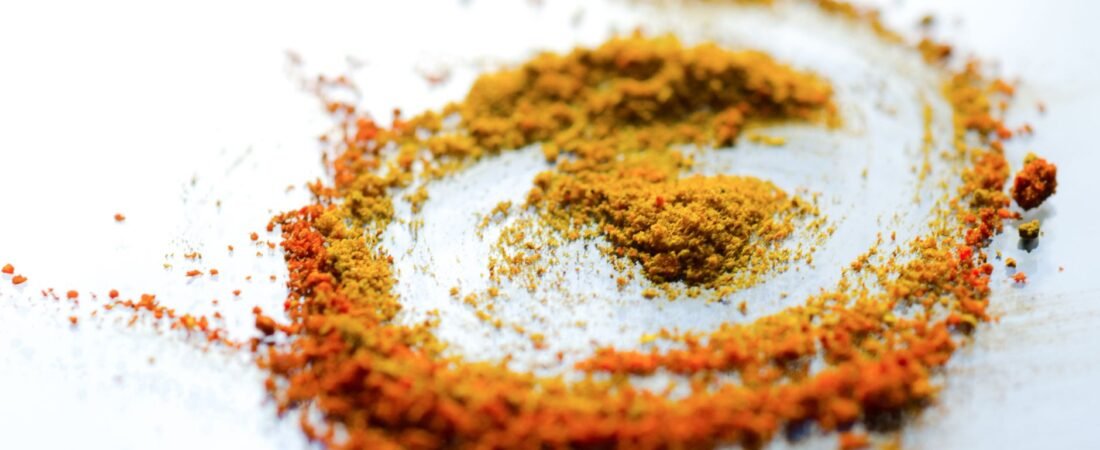
Can Turmeric, Salt and Slaked Lime Really Flatten Your Belly After Childbirth?
After giving birth, many women notice that their abdomen doesn’t immediately return to its pre-pregnancy shape.
The skin may feel looser.
The abdomen may feel softer.
There may be more fat around the waist.
And sometimes, the stomach simply looks different from before pregnancy.
In many Southeast Asian families, traditional remedies are often recommended during the postpartum period.
One combination that may sound familiar is a paste made from ingredients such as:
Turmeric + salt + slaked lime
The mixture is then applied to the abdomen, sometimes together with a postpartum abdominal wrap or bengkung.
But what exactly are these ingredients supposed to do?
And more importantly:
Can rubbing them on the stomach actually make the postpartum belly smaller?
Let’s separate the traditional practice from what we can reasonably say based on evidence.
First: Why Does the Belly Look Different After Pregnancy?
Before talking about the ingredients, it helps to understand what actually happens to the abdomen during pregnancy.
The abdominal wall stretches as the uterus expands.
The skin stretches.
The abdominal muscles and connective tissue are placed under considerable tension.
Some women also develop diastasis recti, where the two sides of the rectus abdominis muscle become separated along the midline.
This can contribute to a visible bulge or a softer-looking abdomen after pregnancy. NHS-affiliated guidance notes that abdominal muscles can remain stretched and weak for some time after birth and that diastasis recti can occur during pregnancy.
At the same time, pregnancy-related weight gain includes changes in body fat and fluid.
So a postpartum belly isn’t simply:
“Fat that needs to be melted.”
There can be several different things happening at once.
So What Is Turmeric Supposed to Do?
Turmeric contains curcumin, a compound that has been studied for anti-inflammatory, antioxidant and antimicrobial properties.
There is some clinical research investigating topical turmeric or curcumin for different skin conditions, but the evidence is still limited and the studies don’t establish turmeric as a treatment for reducing abdominal fat.
So if turmeric is applied to the abdomen, it may have some effects on the skin, but that is very different from saying:
“Turmeric burns belly fat.”
There is currently no good evidence that rubbing turmeric onto the abdomen causes the body to break down abdominal fat.
What About Salt?
Salt has an interesting role in traditional body treatments.
When applied to the skin, salt can have a drying effect and can also be used as part of cleansing or exfoliation practices.
But there is an important misconception to avoid.
Salt doesn’t pull abdominal fat out through the skin.
If the stomach temporarily looks slightly different after a treatment, that doesn’t necessarily mean fat has been lost.
Changes in skin moisture, swelling, compression from wrapping and posture can affect how the abdomen looks.
But fat loss is a different biological process.
And Then There’s Kapur Sirih
This is the ingredient where we need to be especially careful.
In traditional Malay practices, kapur sirih generally refers to slaked lime, or calcium hydroxide.
It is alkaline and chemically quite different from ordinary table salt.
Because it can be irritating to skin, using concentrated or improperly prepared calcium hydroxide directly on the body isn’t something we should casually recommend as a cosmetic treatment.
And this is particularly important after childbirth.
The skin may be sensitive, and some women may still be recovering from:
* A C-section incision
* Vaginal tears
* Episiotomy
* Skin irritation
* Postpartum skin changes
Never apply a homemade mixture onto an open wound or healing surgical incision.
So Why Do People Feel That These Mixtures “Work”?
This is where traditional practices can be interesting without automatically assuming they’re either completely effective or completely useless.
There may be several things happening at the same time.
1. The abdomen may be compressed
If the paste is followed by wrapping with a bengkung or abdominal binder, compression can temporarily change the appearance and feel of the abdomen.
That doesn’t necessarily mean fat has disappeared.
It’s similar to how compression clothing can make a body area appear more streamlined while it is being worn.
2. The skin may feel tighter
A topical mixture can change how the skin feels temporarily, especially if it dries on the surface.
That sensation of tightness can be interpreted as:
“My stomach is getting smaller.”
But tighter-feeling skin isn’t the same thing as reduced abdominal fat.
3. Postpartum changes happen naturally
The body is also recovering from pregnancy at the same time.
The uterus gradually contracts after birth, fluid levels change and tissues recover.
So if someone uses a traditional remedy and notices their abdomen becoming smaller over several weeks, it can be difficult to say that the paste itself caused the change.
Several processes are happening simultaneously.
Can It Actually Burn Belly Fat?
No good evidence says that it can.
This is probably the most important distinction in the entire article.
Fat stored underneath the skin is not simply melted away by applying a substance to the skin above it.
For meaningful postpartum weight loss, evidence-based approaches focus on nutrition, physical activity and overall energy balance. ACOG notes that postpartum weight-management approaches generally involve diet, exercise or a combination, although the most effective specific strategy varies.
So if someone claims:
“Apply turmeric, salt and kapur sirih and your belly fat will melt.”
That’s a claim we shouldn’t repeat as fact.
What About the Kunyit?
There is something interesting here.
Turmeric isn’t a completely meaningless ingredient.
Curcumin has been investigated for various skin-related effects, including anti-inflammatory and antimicrobial properties. However, clinical evidence for topical turmeric is still limited and doesn’t establish it as a postpartum belly-reduction treatment.
And there’s another side people don’t always mention.
Turmeric can irritate some people’s skin.
Contact dermatitis and allergic reactions to curcumin/turmeric have been reported.
So “natural” doesn’t automatically mean:
“Safe for everyone.”
What About Women Who Say It Really Worked?
Their experience shouldn’t necessarily be dismissed.
Someone may genuinely notice:
* A smaller-looking waist
* Less bloating
* Tighter-feeling skin
* Better posture
* A more supported abdomen
* Gradual postpartum weight loss
But the important question is:
Which part of the change came from the paste?
And which part came from:
-
Natural postpartum recovery?
-
Diet?
-
Breastfeeding?
-
Increased activity?
-
Reduced fluid retention?
-
Abdominal compression?
-
Healing of stretched tissues?
Without controlled studies, we can’t confidently attribute the change to the paste.
What About Bengkung or Abdominal Wrapping?
This is slightly different.
An abdominal wrap can provide support and compression, which some women may find comfortable during the postpartum period.
But a wrap shouldn’t be confused with a treatment that permanently removes abdominal fat.
If it’s too tight, it can also become uncomfortable and potentially interfere with breathing or movement.
And anyone recovering from a C-section or other birth-related injury should make sure the wound is properly healed and seek appropriate medical advice before applying pressure around the area.
What Actually Helps the Postpartum Belly?
There isn’t one magic ingredient.
Recovery is usually a combination of several things.
1. Give Your Body Time
Pregnancy took months.
Your body doesn’t necessarily return to its previous shape immediately after delivery.
2. Gradually Return to Physical Activity
Once medically appropriate, gradual physical activity can help improve fitness and support weight management.
Postnatal exercise can also help strengthen abdominal muscles and support recovery.
3. Don’t Ignore Your Core
If there is persistent abdominal bulging or a noticeable gap along the middle of the abdomen, it may be worth discussing diastasis recti with a healthcare professional or physiotherapist.
Not every postpartum belly is simply excess fat.
4. Focus on Overall Nutrition
If fat loss is the goal, the important factor is overall energy balance and sustainable eating habits — not a topical mixture.
There is no need to punish your body with extreme dieting immediately after childbirth.
Is the Traditional Mixture Completely Useless?
Not necessarily.
That’s where we need to be fair.
Traditional postpartum practices may have cultural, comfort or ritual value, and some ingredients may have properties that are scientifically interesting.
But we should distinguish:
Traditional use
from
Clinically proven treatment.
Turmeric has been studied for skin-related effects, for example, but that doesn’t mean a homemade turmeric-salt-lime paste has been proven to flatten a postpartum abdomen.
A Word About Safety
If you’re considering applying a homemade mixture to your abdomen, especially shortly after delivery:
Don’t apply it to broken, irritated or healing skin.
Be particularly cautious if you have:
* A C-section wound
* An episiotomy or tear
* Skin infection
* Severe irritation
* Allergies
* Eczema or very sensitive skin
And don’t assume that because an ingredient is traditionally used, it is automatically safe in every concentration or preparation.
The Real Answer
So, can turmeric, salt and kapur sirih flatten a postpartum belly?
There isn’t good evidence that the mixture itself burns abdominal fat or permanently reduces waist size.
Turmeric contains curcumin, which has been studied for several skin-related properties.
Salt can affect the skin surface and moisture.
Kapur sirih is an alkaline compound that requires more caution because it can irritate skin.
And abdominal wrapping can temporarily alter the appearance and provide support.
But none of these should be confused with actually removing abdominal fat.
ZFRBuild Quick Take
The traditional mixture isn’t necessarily “nonsense.”
But traditional doesn’t automatically mean clinically proven.
If someone feels that turmeric, salt and abdominal wrapping make their stomach feel tighter or more comfortable, that experience may be real.
What we shouldn’t claim is that the mixture melts postpartum belly fat.
For lasting changes, think beyond what’s applied on the skin.
What happens inside the body — recovery, nutrition, movement, muscle function and time — matters much more.
Related Article
- Top Air Purifiers for KL Apartments: Haze-Season Picks — Haze-season ready: the best air purifiers for KL apartments compared, with RM prices and filter costs.
- How to use CCTV to enhance home safety: AI CCTV monitoring — Turn your cameras from passive recorders into an active home security system with AI detection, smart alerts and easy setup.
- Malaysia’s Top 10 High-Value CCTV Recommendations for 2026 — The best-value CCTV cameras in Malaysia for 2026 — TP-Link Tapo C545D, EZVIZ H80X DUAL, Xiaomi C301 and seven more picks, with prices and buying tips.
- Best Washing Machines with Built-in Dryer (Malaysia 2026) — Compare the best washing machines with built-in dryer for small Malaysian homes — sizes, RM prices, energy ratings and top picks for 2026.
- ReactOS 0.4.16 Released with Graphical Installer — The open-source Windows-compatible OS finally gets a graphical installer, a unified ISO, and a new ATA driver.
- How long does food take to digest? Bedtime eating explained — How long does food take to digest — and should you eat before bed? Digestion timings, reflux risks and gentle snack ideas for better sleep.