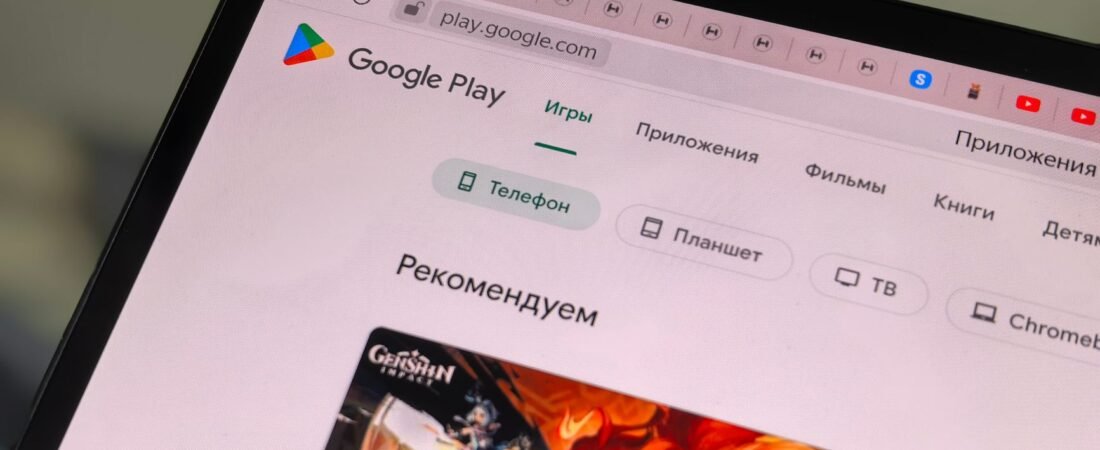
Luanti removed from Google Play over bogus AI claim
TL;DR: On 27 August 2026, the Luanti team announced that its Android app had been removed from the Google Play Store after an automated, AI-generated DMCA notice filed on behalf of Microsoft by Tracer.AI alleged the open-source project infringes Minecraft’s copyright. The notice cites a Minecraft copyright registration but names no specific assets — and Luanti contains no proprietary Minecraft code or assets at all. The team has submitted a counter-notice; the same company pulled the app once before in 2023 — that takedown lasted 46 days.
Luanti removed from Google Play — the headline hit the open-source community in late August 2026, and for anyone who builds with open-source software, it is a familiar and frustrating story. Luanti, the free and open-source voxel game platform formerly known as Minetest, quietly disappeared from the Google Play Store. No update, no warning, no explanation from Google. The reason only surfaced when the Luanti team published a blog post on 27 August 2026: a DMCA takedown notice had been filed on behalf of Microsoft by a company called Tracer.AI, alleging Luanti infringes Minecraft’s copyright.
The claim is, in the project’s own words, baseless. The Luanti app “does not contain any proprietary code or assets, from Minecraft or otherwise.” The notice identifies no asset that allegedly infringes — it points to a Minecraft copyright registration number and nothing else. Yet the app is gone from the world’s largest Android storefront: Malaysian and Southeast Asian players who search for “Luanti” or “Minetest” on Google Play now find nothing — or worse, third-party copies.
Here is what actually happened, who filed the notice, why the DMCA process keeps failing open-source projects, and what it means for Malaysian gamers, parents, and developers.
What Is Luanti? The Open-Source Voxel Platform Behind the Headlines
If you have never heard of Luanti, you have almost certainly heard of its old name: Minetest. The project was started in 2010 by a developer known as celeron55, inspired by the newly released Minecraft Alpha, with a specific goal — a sandbox in a voxel grid that ran well on low-end hardware. In 2024 it renamed itself to Luanti, to shed the “Minecraft clone” label and mark its evolution beyond its original inspiration.
Luanti is best described as a voxel game-creation platform rather than a single game. It does not ship with any games or game assets by default. Instead, players browse a catalog of community-created games inside the app, or join multiplayer servers. That catalog, called ContentDB, is full of original creations: Asuna, a biome-exploration sandbox; Extra Ordinance, a top-down shooter; Lazarr!, a laser puzzle game; and Klots, a 3D sliding block puzzle.
Key facts for this story:
- Luanti is a non-profit project developed by a community of volunteers.
- It is open source — anyone can view, modify, learn from, redistribute, and even sell games made with it on platforms like Steam.
- It is genuinely popular as a free Minecraft alternative, especially on low-end hardware and old Android phones.
- It is widely used in education, including many schools across Europe.
All of this makes Luanti a textbook example of what open-source software should look like: transparent, community-governed, and legally clean — which is exactly why this takedown is so dangerous as a precedent.
Why Was Luanti Removed from Google Play?
The mechanism behind the Luanti Google Play removal is the DMCA — the Digital Millennium Copyright Act, a US law that establishes a notice-and-takedown process for infringing content. Platforms like Google Play follow it to avoid liability for material their users upload: they are not responsible for what users publish, but they are expected to take corrective action when infringement is reported.
The notice that took Luanti down was filed on behalf of Microsoft by Tracer.AI. It reads, in full:
These products use copyrighted assets as outlined directly from the Minecraft game (available at www.minecraft.net) without authorization and should be removed. Specifically, US Reg. #TX 8-192-097
That registration number — US Reg. #TX 8-192-097 — is the US Copyright Office registration for Minecraft Java Edition 1.9. And that is the entire substance of the claim. As the Luanti team points out, the notice “does not provide any information aside from this and does not outline which assets Luanti allegedly uses.”
Which assets? That is the question the notice never answers. Luanti’s engine ships with no games and no game assets beyond its own original textures and properly attributed fonts, all documented in the project’s license file. The Development Test game in the GitHub repository is a bare-bones testing environment and is no longer included in releases. Minetest Game, the old default survival game, was decoupled from the engine in December 2023 — it is now downloaded from inside the client like any other community game, and its assets are all original and properly licensed.
Third-party content on ContentDB is a separate matter: those games, mods, and texture packs are created and uploaded by the community, like most apps on Google Play. Packages are reviewed manually by volunteer staff, who proactively check for copyright problems, including commercial assets. The Luanti team says it has been looking into automated asset flagging using perceptual hashing — but with a human making the final call, precisely because AI detection caused this mess in the first place.
In other words: the notice points at a registration and names nothing; the project has published its entire asset inventory in response. The asymmetry could not be clearer.
Who Filed the Notice? Tracer.AI, Microsoft, and the Rise of Automated Takedowns
Tracer.AI describes itself as “a next-generation brand protection platform” whose “AI agents streamline workflows” — monitoring digital channels, taking down detections, and analyzing data for brand-protection intelligence. In plain language: it sells automated copyright-enforcement-as-a-service, and it filed this notice on behalf of Microsoft.
Its own marketing gives a sense of how the sausage is made. In a 2024 blog post, Tracer.AI boasts of “85% faster takedowns,” “100% more reviews month-over-month,” and “review times that are six times faster than traditional methods,” claiming this produces “44% more takedowns month-over-month.”
More takedowns, faster — that is the business model, and volume is the point. When a takedown service is incentivized to maximize notices filed, accuracy becomes optional. A human reviewer would look at Luanti, an open-source project with a fully documented asset inventory, and close the file in seconds. An AI agent pattern-matching “voxel game” against “Minecraft” fires the notice and moves on.
This is not Tracer.AI’s first encounter with Luanti, nor its only questionable claim this year:
- March 2023: Luanti’s Android app received a nearly identical notice from the same company. The project submitted a counter-notice, and the app was eventually reinstated — after 46 days.
- February 2026: an indie game called Allumeria, which shares a similar voxel art style, received a DMCA takedown from Tracer.AI on behalf of Microsoft, resulting in its temporary removal from the Steam store. Microsoft eventually dropped the notice — after public noise.
- August 2026: the same company, same client, same vague notice — and Luanti is off Google Play again.
A pattern like this stops looking like an enforcement mistake and starts looking like a business model that externalizes its own carelessness onto the projects it hits. The Luanti team has now been taken down twice by the same automated pipeline, on the same theory, with no asset ever identified.
A Timeline of Repeated, Baseless Claims
| Date | Event |
|---|---|
| March 2023 | Tracer.AI files a similar DMCA notice against Luanti’s Android app on behalf of Microsoft |
| 25 March 2023 | Luanti submits a counter-notice challenging the claim |
| 10 May 2023 | App reinstated after 46 days — far beyond the DMCA’s required window |
| February 2026 | Indie voxel game Allumeria removed from Steam after a Tracer.AI/Microsoft notice; notice later dropped after public pressure |
| 27 August 2026 | Luanti publishes its blog post revealing a second takedown; the Android app is unavailable on Google Play |
| Late August 2026 | Luanti submits a counter-notice and asks the community to share the post publicly |
The 2023 precedent is the most damning part. Section 512(g)(2)(c) of the DMCA requires service providers to restore removed material “not less than 10, nor more than 14, business days following receipt of the counter notice.” Luanti submitted its counter-notice on 25 March 2023; the app was not reinstated until 10 May 2023. Google blew straight through the statutory window — 46 days versus a legal maximum of 14 business days — and the Luanti team explicitly calls this out.
The DMCA Process Is Broken — and Open Source Pays the Price
Why does this keep happening? Because the incentives are all wrong. The DMCA was designed as a good-faith mechanism: rights holders identify infringing material, platforms remove it, accused parties counter-notice to restore it. But it assumes accuracy on the filing side and diligence on the platform side — neither holds when notices are generated by AI agents at scale.
For a project like Luanti, the costs are severe even when the claim is eventually defeated:
- Users can’t find or update the app. For the duration of the takedown, the official app is invisible on Google Play, and existing installs stop receiving updates — including security fixes.
- Users get redirected to shady alternatives. When the official listing vanishes, search results fill with unofficial forks, ad-ridden clones, and APK-mill copies that can carry malware — the Luanti team warns users “risk settling for shady or ad-ridden forks instead.”
- The project bleeds reputation and momentum. Google Play discovery is how most casual users find apps; two weeks of absence can cost more users than a project gained in months.
- Small teams can’t fight forever. Luanti is a non-profit staffed by volunteers. It has no legal department to fire at every automated notice. As the team puts it: “If we were a small company relying on income from the app, this would be especially devastating. We, like most open-source communities, lack the resources to continually fight unfounded DMCA notices.”
And here is the deeper problem the Luanti team names directly: the concept of a game built from 3D cubes or voxels is not something anyone owns. Minecraft itself was inspired by the 2009 game Infiniminer; later games like Hytale show that block games are an entire genre, of which Minecraft is one member. Mojang and Microsoft may enforce copyright on their actual assets — textures, code, art — but they cannot use the DMCA to monopolize a genre. US law itself, 17 U.S. Code § 102(b), says ideas and concepts cannot be copyrighted; only their specific expression can.
“If a company can repeatedly submit the same DMCA notice with no explanation or evidence, taking projects down for months at a time, the system is broken,” the Luanti team wrote.
What This Means for Malaysian Users and Developers
Malaysians are among the heaviest mobile gamers in the region, and Minecraft has a massive local following — which makes Luanti’s removal from Google Play a real consumer issue here, not just a developer drama.
If you already have Luanti installed from Google Play, it stays on your device, but you will not receive updates until the listing is restored. If you were hoping to try it — especially parents who want a free, safe, ad-free Minecraft alternative for their kids on an older phone — the listing is currently dead.
The good news: Luanti does not depend on Google Play to exist. The Android app remains available through F-Droid, the open-source Android app store whose official repository contains only verified free software, and as a direct APK download from luanti.org. Recommend the official route only — never random APK sites.
For Malaysian developers and indie game makers, this episode is a case study in platform risk:
- Your app can be removed from Google Play or Steam by an automated notice you never see coming, with no asset ever identified.
- Counter-notices work eventually, but “eventually” can be six weeks of lost storefront presence.
- Open-source projects are structurally unable to absorb repeated takedowns — and that is precisely why automated enforcement keeps targeting them.
If you publish apps on Google Play, now is a good moment to check that your project has a clear licensing trail, original assets, and a public inventory of what your app ships — the same documentation that is making Luanti’s counter-notice easy to defend. And if you use AI tools in your own work, this is a warning about what happens when detection logic runs without human verification: someone, somewhere, is always on the receiving end.
What Happens Next for Luanti
The Luanti team has already submitted a counter-notice for the current takedown, and the app should be restored “hopefully sooner than 46 days.” But they are not waiting quietly. The blog post makes three direct demands:
- To Microsoft, Mojang, and Tracer.AI: stop relying on AI tools to send inaccurate and vague DMCA notices. Detection must be verified by a human and substantiated with tangible proof.
- To Google: improve how notices are verified, allow users to respond without apps being taken down for extended periods, and properly comply with copyright law.
- To the community: share the post far and wide, to raise awareness and pressure the companies involved.
The project is also honest about the fragility of its distribution alternatives: “Unfortunately, both distribution mechanisms [F-Droid and direct APKs] are increasingly under threat.” In an era of tightening sideloading rules and mounting pressure on alternate app stores, losing Google Play — even temporarily — hurts a free project more than it used to.
The realistic best case: Luanti returns to Google Play within a week or two, the counter-notice holds, and the project resumes normal service having documented the whole saga. The realistic worst case: nothing changes, and the next AI-generated notice — against Luanti, or against a Malaysian indie game with a blocky art style — lands on an unsuspecting developer with no blog audience to amplify the fight.
How to Protect Your Open-Source Project From Bad Takedowns
You cannot stop an automated DMCA notice from being filed, but you can make the aftermath much cheaper. Practical steps, based on how Luanti responded:
- Document your asset inventory publicly. Luanti’s blog post lists what the app actually ships: original textures, attributed fonts, no bundled games. When a notice claims infringement, your counter-notice is only as strong as your evidence — publish it before you need it.
- Keep your licensing files pristine. Every asset, font, and third-party component should have a clear license line. Luanti points to its license file as part of its defense.
- Know your counter-notice rights. Under the DMCA, a counter-notice obligates the platform to restore material within 10–14 business days. File it promptly — and publicly call out platforms that exceed the window, as Luanti did.
- Run human-reviewed content moderation. If you operate a community catalog like ContentDB, manual review plus perceptual hashing as a suggestion tool — with a human always making the final call — catches real infringement without nuking legitimate projects.
- Maintain alternative distribution. F-Droid, direct APK/IPA downloads, and your own site mean a storefront takedown is an inconvenience, not an existential event.
- Build community and press reach early. The Allumeria notice was dropped only “after public noise,” and Luanti’s post asks readers to share it. A project with an audience can fight back; without one, it is a soft target.
FAQ: Luanti’s Removal from Google Play
Is Luanti free?
Yes. Luanti is a free, open-source, non-profit voxel game platform. You can use it, modify it, redistribute it, and even sell games made with it. It was previously known as Minetest.
Is Luanti a Minecraft clone?
No. Luanti is a voxel game-creation platform with its own original engine and assets. It was inspired by Minecraft Alpha in 2010, but it ships with no Minecraft code, textures, or other assets — which is exactly why the copyright claim is baseless. Voxel-style games are a genre, not something one company owns.
Is Luanti still available on Android?
Yes, just not on Google Play for now. You can install it from F-Droid or download the official APK from luanti.org. Existing installs from Google Play will keep working but won’t receive updates until the listing is restored.
What is a DMCA notice?
The DMCA is a US copyright law that gives platforms a notice-and-takedown process: a rights holder reports allegedly infringing content and the platform removes it to avoid liability. The accused party can file a counter-notice to get content restored — usually within 10 to 14 business days.
Will Luanti return to Google Play?
Very likely. The project has submitted a counter-notice, the same claim was successfully defeated in 2023, and the notice identifies no actual infringing assets. The open question is how long Google takes — last time it was 46 days, far beyond the legal limit.
Conclusion: One System, Repeated Failures
Luanti removed from Google Play over an AI-generated notice that names no assets is not an isolated accident — it is the third time in three years that the same automated pipeline has targeted a project over voxel graphics on behalf of the same client. The open-source project will almost certainly win its counter-notice, and the app will almost certainly come back. But every week it is gone, real users lose access to a safe, free alternative, and real trust in the app-store ecosystem erodes.
For Malaysian readers, the practical takeaways are simple: if you want to try Luanti today, use F-Droid or the official APK; if you develop software, document your assets and know your counter-notice rights; and if you care about the open web and open-source software, pay attention when a takedown machine misfires — because the next target might not have a blog, a community, or 46 days to spare.
More from ZFRBuild
- Qwen 3.8 27B Overthinking: How to Tame an Excellent LLM
- AI Price War: Why Cheaper Models Are Winning
- Why Your Phone Storage Keeps Filling Up Even When You Delete Photos
Related Article
- ReactOS 0.4.16 Released with Graphical Installer — The open-source Windows-compatible OS finally gets a graphical installer, a unified ISO, and a new ATA driver.
- How long does food take to digest? Bedtime eating explained — How long does food take to digest — and should you eat before bed? Digestion timings, reflux risks and gentle snack ideas for better sleep.